|
|
|
|
|
[Reference] |
||
|
|
||
|
|
|
|
|
|
|
(GHG: Green house gases) |
|
|
|
|
|
||||||||||||||||||||
|
|
|
|
|
||||||||||||||||||||
|
|
|
|
|
||||||||||||||||||||
|
|
|||||||||||||||||||||||
|
|
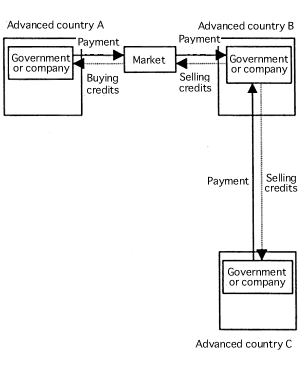 |
|
|
||||||||||||||||||||
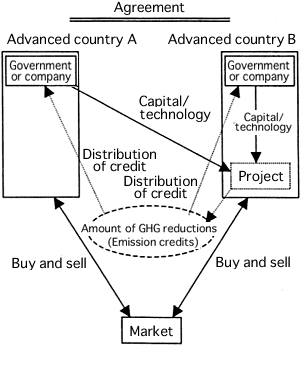
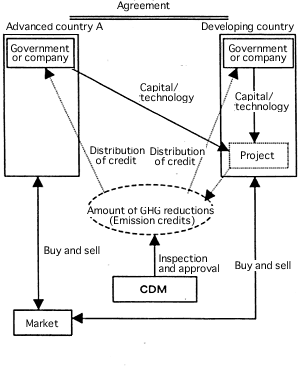
|
|
|
|
|
|
||
|
|
|
[Reference] |
|
|
|
|
|
|
||
|
|
|
|
|
Oct. 13, 2000 |
||
|
|
|
|
|
1. Basic Approach of the Electric Power Industry |
||
|
* |
It is possible to cost-effectively control CO2 emissions on a global scale, and the electric power industry believes that this is an important measure that supplements Japanユs national policy. |
|
|
○ |
This also has the advantage of transferring Japanユs advanced electric power technology and know-how overseas. |
|
|
|
|
|
|
2. Opinions concerning the Rules and Framework of the Kyoto Mechanisms |
||
|
* |
It should be cost-effective on a global scale. |
|
|
|
- |
No upper limit should be placed on the use of the Kyoto Mechanisms |
|
|
- |
A market should be created in which transactions can be conducted at appropriate prices. To achieve this, the private sector should be broadly involved. |
|
|
- |
Operational costs associated with the Kyoto Mechanisms should be minimized. |
|
|
- |
In addition to the joint implementation of afforestation and other measures to create atmospheric CO2 sinks, CDM projects should also be addressed. |
|
* |
The framework should be simple, easy to understand, and capable of being used with a sense of security. |
|
|
|
- |
Until the market is adequately developed, it is appropriate for the sellers to assume responsibility. |
|
* |
The framework should be sustainable. |
|
|
|
- |
It is important to ensure that the projects are sustainable and feasible as a business. Any profitable activity that contributes to the reduction of CO2 emissions should be recognized. |
|
|
- |
The judgment of the recipient country is important when evaluating the sustainability of a given project. Nuclear power and other designated technologies should not be excluded in advance. |
|
* |
The framework should make the project profitable for both the implementing and recipient countries. |
|
|
* |
Early involvement should be both recognized and advocated. |
|
|
|
- |
Based on the idea of メlearning while doing,モ minimal rules and frameworks should be established as soon as possible. |
|
|
|
|
|
3. Approach to Japan's Domestic System |
||
|
* |
The methods proposed for following the initial emission quotas present various problems with respect to fairness and practicality, and are difficult to accept. |
|
|
* |
Even if the national government secures a source of revenue through emissions trading and other means, the basic approach should be to squeeze further funds out by reviewing expenditures. No new surtaxes should be imposed. |
|
|
|
|
|